James William
If you have spent any time in the Rainbow Six Siege community lately, you have probably run into the term “marketplace r6 siege” while searching for a safer way to trade skins, charms, and uniforms. The old way of trading, DMing strangers on Discord or Reddit and hoping for the best, has always carried risk. A dedicated marketplace changes that equation by giving buyers and sellers a structured, monitored space to do business.
This guide walks through what the marketplace r6 siege ecosystem actually offers, how the process works from sign-up to final trade, and what to watch for so your first transaction is not your last.
What Does “Marketplace R6 Siege” Actually Mean?
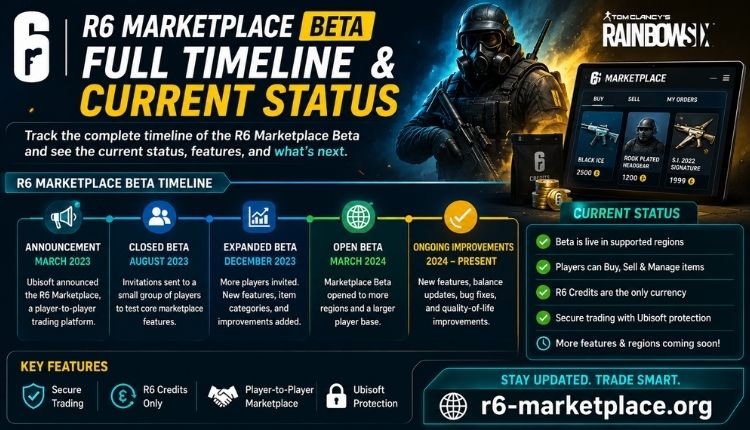
The phrase gets used a couple of different ways online, so it is worth clearing up. Most people typing it into Google are looking for a platform where Rainbow Six Siege players can list cosmetic items, weapon skins, operator uniforms, headgear, charms, and limited-edition event drops for sale or trade. The R6 Marketplace is one such platform built specifically for this purpose.
Instead of relying on informal peer-to-peer arrangements, it gives players listings they can browse, prices they can compare, and a transaction flow that reduces the chance of getting scammed. That last part matters more than people expect until they have been burned once.
Why Players Are Moving Away From Informal Trading
Before platforms like this existed, trading in Siege meant one of two things: trusting a stranger to send first, or trusting a middleman you found in a Discord server. Neither option holds up well at scale. A few recurring problems pushed players toward a proper marketplace model:
- Items or payments never arriving after one side sent first
- No way to verify whether a seller’s account or item was legitimate
- Prices set arbitrarily rather than by actual demand
- No recourse once a trade went wrong
A marketplace addresses these by adding structure: verified accounts, transaction tracking, and pricing that reflects what items are genuinely worth in the current market rather than whatever a seller feels like asking.Visit More.
How the Trading Process Works
Getting started is not complicated, but it helps to know the sequence before you dive in.
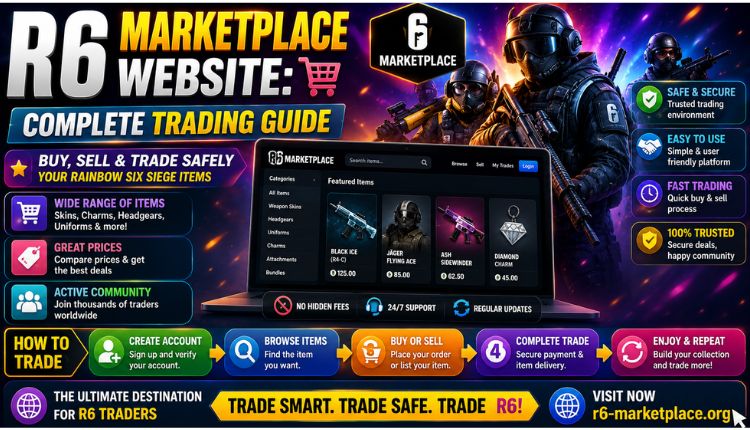
- Create an account: New users go through the R6 Marketplace sign up flow, which asks for an email address and a password.
- Log in: Returning users access their account through the R6 Marketplace login page.
- Browse or list items: From here you can search active listings or put your own items up for sale.
- Complete the trade: Payment and item exchange happen through the platform’s transaction system rather than a private message.
That structure is really the whole point. Every step happens somewhere the platform can see it, which is exactly what informal trading never had.
Marketplace Trading vs. Informal Trading: A Quick Comparison
| Factor | Marketplace R6 Siege | Informal / Peer-to-Peer Trading |
| Account verification | Required before trading | Rarely enforced |
| Price transparency | Set by visible market demand | Negotiated blind, often inconsistent |
| Scam protection | Transaction monitoring in place | None, you’re on your own |
| Ease for beginners | Guided sign-up and listing process | Requires finding trustworthy contacts first |
| Item variety | Centralised catalogue of skins, charms, uniforms | Scattered across Discord servers and forums |
What You Can Actually Trade
The catalogue tends to cover most of what collectors care about:
- Weapon skins, including sought-after sets like Black Ice
- Operator uniforms
- Headgear and charms
- Limited-edition items tied to past in-game events
That last category is where a lot of the real trading activity happens. Once an event ends, its cosmetics stop being obtainable through normal gameplay, so collectors turn to the marketplace to fill gaps in their inventory. Keeping an eye on R6 Marketplace prices before you buy or sell is a smart habit, since values shift with demand.
Security: What Actually Protects You
Security is the whole reason marketplaces exist instead of DMs. A few features do most of the heavy lifting:
- Two-factor authentication: Covered in more detail on the R6 Marketplace 2FA page, this adds a second verification step so a stolen password alone is not enough to access your account.
- Encrypted login sessions: Your credentials are not sitting around in plain text.
- Transaction monitoring: Unusual activity gets flagged rather than ignored.
- Verified accounts: Both sides of a trade have gone through the same sign-up process, which cuts down on throwaway scam accounts.
None of this makes a marketplace risk-free. It makes it dramatically lower-risk than the alternative, which is really the honest claim to make.
Tips for Trading Without Regret
A few habits separate people who have a good experience from people who end up frustrated:
- Check current prices before committing to a buy or a sell. Don’t anchor to the first number you see.
- Don’t rush a trade just because a listing looks good. Rare items tend to resurface.
- Turn on two-factor authentication the day you create your account, not after something goes wrong.
- Read a seller’s history if the platform shows one.
- If a deal feels off, it usually is. Walk away.
Where This Is Heading
Trading platforms for games like Siege tend to grow in predictable directions: better mobile access, more detailed price history, and tighter account security as the user base scales. Whether or not every one of those improvements lands on schedule, the direction is clear. Players want the convenience of a marketplace without giving up the safety that informal trading never had in the first place.
FAQs
Is the marketplace R6 Siege platform safe to use?
It is built specifically to reduce the risks that come with informal trading, using account verification, encrypted sessions, and transaction monitoring. No online marketplace is risk-free, but the structure here is a significant step up from trading through DMs.
Do I need a Rainbow Six Siege account to use it?
Yes. You will typically need to link your Siege account during or after the sign-up process so items can be matched to a verified profile.
How is pricing decided?
Prices track rarity and current demand rather than being fixed by the platform. Items tied to discontinued events or seasonal drops, such as certain skins, tend to command higher prices.
Is there a cost to sign up?
Creating an account is free. Small fees typically apply only when a trade actually goes through.
Can beginners use it without getting overwhelmed?
The sign-up and listing flow is designed to be straightforward, and most platforms provide step-by-step guidance for first-time traders.
What happens if a trade goes wrong?
This is exactly why the transaction system exists. Unlike a private DM trade, marketplace transactions are tracked, which gives support teams something to investigate if a dispute comes up.
Conclusion
The rise of marketplace R6 Siege platforms says a lot about where trading culture in Rainbow Six Siege has landed. Players got tired of gambling on strangers, so the community moved toward something with actual structure: verified accounts, visible pricing, and transactions that don’t depend entirely on trust.
Whether you are chasing a discontinued Black Ice skin or just clearing out cosmetics you never use, a proper marketplace turns what used to be a risky guessing game into something closer to a normal transaction. Start with the sign-up process, get familiar with current prices, and take the security basics seriously from day one. That’s really all it takes to trade with confidence instead of crossed fingers.