James William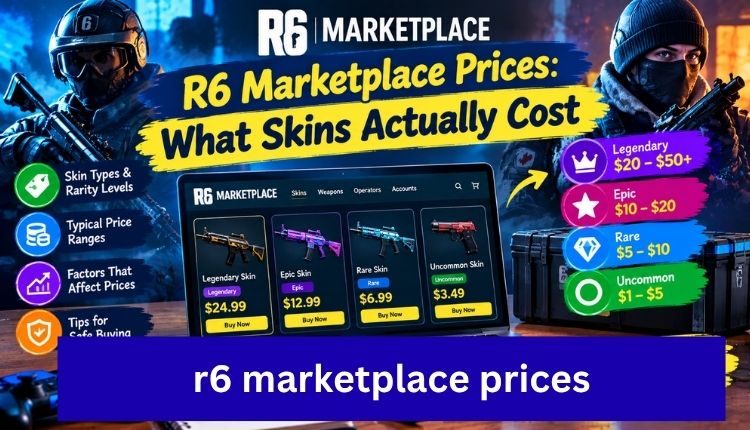
If you’ve tried to figure out what a Black Ice skin or a rare charm is worth on the R6 Marketplace, you’ve probably noticed there’s no fixed price tag anywhere. That’s because the marketplace doesn’t work like a store. It works like an order book, where prices move with whatever buyers and sellers are willing to accept in that moment. This guide walks through what actually moves R6 Marketplace prices, gives you a realistic sense of where different item categories tend to land, and covers what to expect once trading is back online.
Quick Status Check: Is Pricing Even Relevant Right Now?
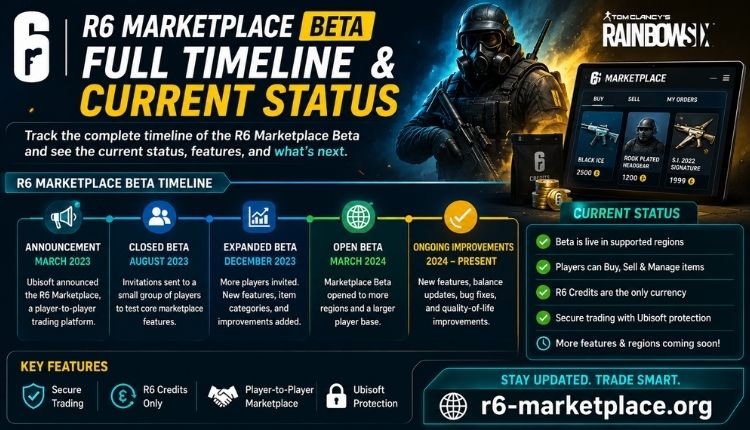
Worth addressing up front, since it changes how you should read the rest of this article. Ubisoft’s official marketplace launched in June 2025 and has been offline since late December 2025 after a security incident. There’s no confirmed relaunch date as of this writing. For the full breakdown of the shutdown, eligibility, and what’s known about a return, our R6 Marketplace Beta timeline covers it in detail.
So why write about prices for a closed marketplace? Because the pricing mechanics that governed the market before the shutdown are the same ones Ubisoft has said will carry over when it reopens. Knowing them now means you won’t be starting from zero once trading resumes.
How R6 Marketplace Prices Actually Work
The marketplace r6 siege system runs on R6 Credits, not real money, and it matches buyers and sellers automatically rather than letting people haggle. You set the price you’ll pay or accept, and the system pairs you with the closest match on the other side. That single design choice is why prices swing the way they do: there’s no fixed sticker price, just whatever the current highest bid and lowest ask happen to be.
A handful of things push those numbers up or down:
- Scarcity: Items pulled from packs or retired after an event can only get rarer over time, since no new supply enters the pool.
- Operator popularity: A skin for a heavily picked operator like Ash or Jäger tends to sell for more than one for an operator nobody plays.
- Nostalgia and age: Early-season cosmetics carry a premium simply because they’ve been around since the game’s earlier years.
- Community hype: When a pro player or streamer shows off a specific skin, demand — and price — can spike within days.
- Ubisoft’s own patches: Re-releases, reworks, and new item drops all shift what people are willing to pay for older cosmetics.
Typical R6 Marketplace Price Ranges by Item Type
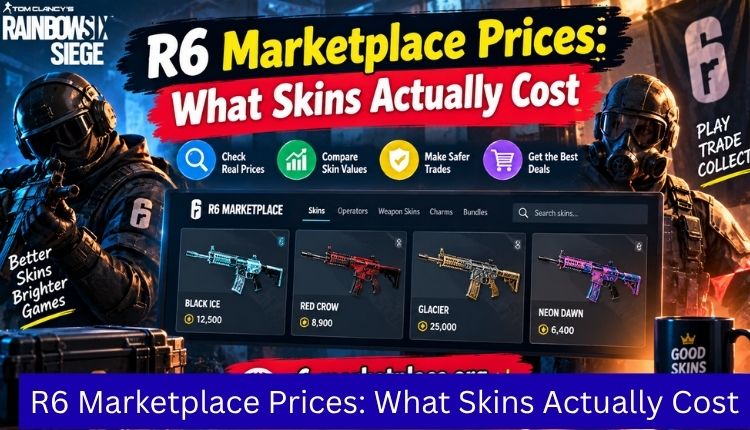
There’s no way to give exact numbers that will still be accurate months from now, since values shift with every patch and every community trend. What’s more useful is understanding where each category typically sits relative to the others, based on how the market behaved before the shutdown.
| Item Category | Relative Price Tier | What Drives the Price |
| Black Ice weapon skins | Highest | Universal appeal, long-running scarcity, strong collector demand |
| Legendary/Epic weapon skins | High | Rarity tier, esports or event tie-ins |
| Elite operator uniforms | High | Lore appeal, full-set collector pressure |
| Seasonal battle pass skins | Mid | Depends heavily on how limited the original release was |
| Standard operator uniforms | Mid-low | Common availability, weaker collector pull |
| Rare charms | Variable | Can spike based on event exclusivity or esports tie-ins |
| Standard weapon skins (current season) | Lowest | High supply, not yet tradable in most cases |
If you want a deeper dive into one of the highest-tier categories specifically, our Black Ice price breakdown looks at why that particular skin line consistently sits at the top of the market.
Weapon Skins vs. Operator Cosmetics: Which Holds Value Better?
Weapon skins generally trade more actively than operator uniforms or headgear, mostly because they’re usable across more of the roster. A universal weapon skin fits into more loadouts than an operator-specific uniform ever could, so demand stays broader and more consistent. Operator cosmetics, on the other hand, can spike hard around a buff or nerf, then settle once the meta shifts again. If you’re trying to figure out where to start browsing once the ubisoft marketplace r6 reopens, weapon skins are usually the safer entry point for understanding how pricing behaves.
Why Prices Swing So Much Around Events
Seasonal events are where R6 Marketplace prices move fastest. During an event, supply of the tied cosmetics is at its highest, so prices tend to sit lower than they will later. Once the event ends and the item stops being obtainable through packs, prices climb as the available supply shrinks and demand stays steady or grows. This pattern repeats every season, which is part of why experienced traders wait rather than buy the moment something drops.
Tips for Reading Prices Once Trading Resumes
- Check recent completed trades, not just current listings: Listed asking prices can sit well above what items are actually selling for.
- Watch operator pick-rate trends: A skin’s value often tracks the operator’s popularity more closely than its rarity tier.
- Don’t chase hype spikes: Prices driven by a single viral clip or pro-player moment usually cool off within a week or two.
- Compare universal items against operator-specific ones: Broader usability tends to mean steadier long-term value.
- Keep your account secure: Given that account compromise was part of what led to the shutdown, enable two-factor authentication the moment you’re able to. Our R6 Marketplace login guide covers how that setup works.
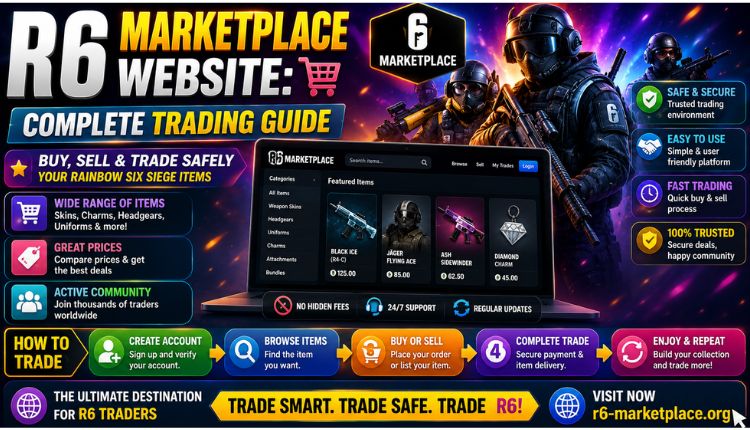
For a full rundown of the buying and selling mechanics themselves, the R6 Marketplace website trading guide walks through the order-book process step by step.
FAQs
Are R6 Marketplace prices set by Ubisoft?
No. Ubisoft doesn’t set fixed prices. The marketplace runs on an order-book model, so prices are determined by what buyers and sellers are actually willing to trade at.
What’s the most expensive category on the R6 Marketplace?
Black Ice weapon skins and other early-release Legendary cosmetics have historically topped the market, largely due to scarcity and their broad, universal appeal, Visit more.
Do prices reset when the marketplace comes back online?
Ubisoft hasn’t confirmed the details of how pricing history or existing listings will carry over after the relaunch. We’ll update this article once that’s official.
Can I trade real money for R6 Marketplace items?
No. All marketplace transactions use R6 Credits exclusively — there’s no direct real-money trading between players.
Do newer skins ever become expensive?
Occasionally, if Ubisoft confirms an item won’t return or a skin becomes tied to a major esports moment. Most current-season items stay cheap simply because supply is still high.
Is it worth holding onto rare skins instead of selling right away?
For genuinely scarce, discontinued items, patience has historically paid off better than an immediate sale, since values tend to climb once supply stops.
Conclusion
R6 Marketplace prices were never going to work like a fixed price list, and that’s kind of the point. Scarcity, operator popularity, community hype, and Ubisoft’s own patch cycle all pull in different directions at once, which is exactly what makes the market worth paying attention to instead of ignoring.
The marketplace is offline for now, but the pricing logic covered here is the same groundwork Ubisoft is expected to carry into the relaunch. Bookmark this page, and once trading opens back up, you’ll already know what to look for.